Aeration is a key part of any lawn care programme, as it helps alleviate soil compaction, improve water infiltration, and enhance root growth. There are two main types of aeration: hollow tine and fracture tine, which is right for you? Let The Green Standard help make that decision.
Hollow tine aeration involves removing small cores of soil from the lawn, typically around 60mm deep. The cores are removed and left on the surface or can be spread back into the lawn. This method is ideal for lawns that are heavily compacted or have heavy clay soil, as it helps reduce compaction by physically removing soil and creating space for better root development.
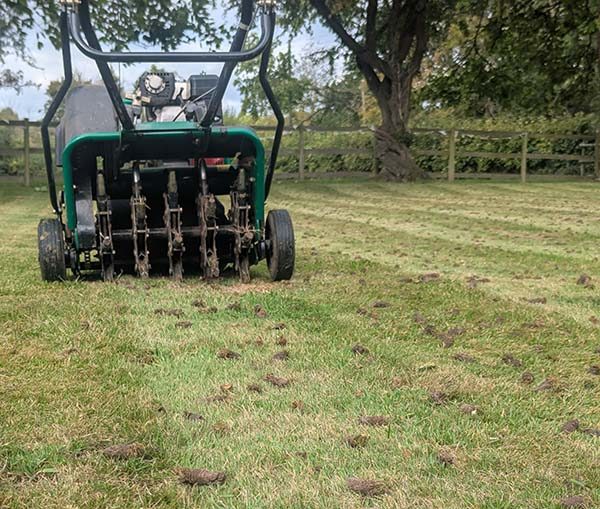
Service included in Green Standard & Signature programmes.
This type of aeration uses tines or spikes to puncture the soil, creating deep holes or fractures in the ground rather than removing soil cores. These fractures allow better air and water movement within the soil but don’t leave behind the cores like hollow tine aeration. Fracture tines are especially effective on lawns with lighter or sandy soils that don’t suffer from severe compaction but need help in improving root depth and overall soil structure.
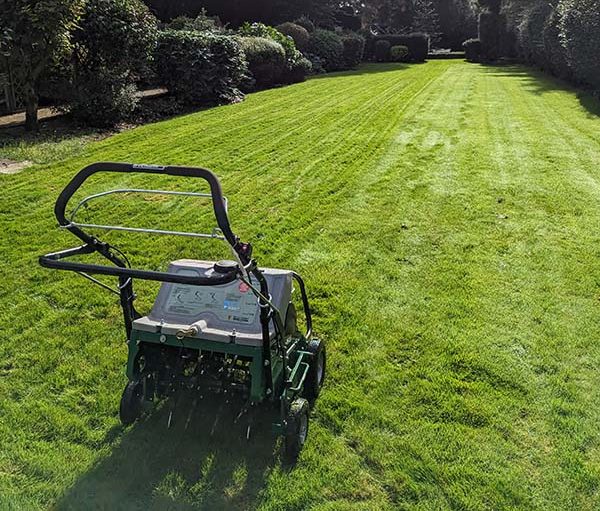
Both types of aeration are important tools for maintaining a healthy, green lawn, and the choice between them depends on the soil type and the specific needs of your lawn. A well-timed aeration treatment—whether hollow or fracture tine—will give your lawn the boost it needs to thrive year-round!